The Federal Trade Commission has spent years providing businesses with guidance and advice concerning their security. Now, this guidance has converted into enforceable mandates.
In short, your business needs to have systems and protections in place—not plans—in order to abide by last month’s executive order that focuses on the prevention of cybercrime and fraud. Let’s touch on what needs to be accomplished in order for you to do so.
Blockchain is one of the latest and greatest developments to come in computing. The spotlight is on Bitcoin, Ether, Litecoin, Dogecoin, and several other cryptocurrencies that take advantage of the blockchain, but it’s important to remember that it’s not exclusive to cryptocurrencies. In fact, it has several great uses, with some of the most important being cyber security, transparency, and privacy.
Whether you’re just a small business looking to get operations moving in your chosen location, or you’re an enterprise with multiple offices across the country, one thing is universally the same: you need IT support in some capacity. As more technology is added to networks of all sizes and complexities, the need to manage this technology improves. Thankfully, you don’t necessarily have to go at it alone--you have third-party outsourcing at your disposal, which can save you both time and money in the long run.
Someday, you’re going to encounter a situation where you absolutely need Wi-Fi and the only option will be a public connection. This becomes rather problematic, as a public Wi-Fi connection is far from secure for business purposes. A method to maximize productivity without compromising security is needed for every business that has employees working out of the office, but what’s the best way to do it?
Spyware, like other malware, is a problem for any organization. Since your business generates, collects, and uses considerable amounts of data, there are plenty of organizations that want to get their hands on it. You spend so much time and money protecting your data against threats on the Internet, but what if the spyware were to just come standard on the computer you just bought?
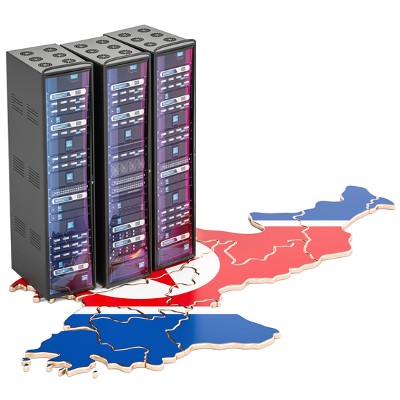
In a statement given by Tom Bossert, the homeland security adviser to the White House, blame for the WannaCry attacks leveraged from May 12th to the 15th in 2017 was attributed to the Democratic People’s Republic of Korea. This assertion is in line with the conclusions that New Zealand, Australia, Canada, and Japan have come to, according to Bossert.
While many might see having a credit card stolen as identity theft, this is an oversimplification that can prove dangerous. While credit card theft can be an element of identity theft, equating the two means that other forms of identity theft are overlooked. In today’s blog, we’ll go over why identity theft and credit card theft aren’t exactly the same thing, and what you can do to help keep your business safe from damage.
There are many organizations in the world that simply can’t have cybercriminals and hackers interfering with their data. One of these organizations, CERN (whose acronym translates to the European Laboratory for Particle Physics) has far too powerful of a computer grid to allow hackers to access it. To keep it safe, CERN has deployed what may be the future of cybersecurity: artificial intelligence.
In the last few months, there have been several high-profile data security breaches that resulted in the theft of millions upon millions of non-public information records. Though much of the focus in the aftermath of the breaches was on personal identity theft and prevention, it’s important to keep in mind that not all the stolen data records target individuals. Business entities are also at risk. Vendors and partners that you do business with regularly will probably have record of your company’s non-public information, payment information, or tax ID number.
Your identity has quite a lot of value, especially in the wrong hands. Security firm ZoneAlarm put together some numbers in 2011 concerning identity fraud, and it even shocked us. Let's talk about a few of these statistics and what it means.
Email is (and has been) a prime method of communication for businesses of all sizes. With email comes a whole slew of issues that are essentially synonymous with the technology; spam, information overload, phishing, and information privacy. Even Georgia small businesses that only do business locally are at risk of these issues. Personal email accounts are equally at risk. Employing proper precautions and practices whenever communicating via email is very important to prevent the risk of security compromises, monetary loss, and even legality issues.